Spicy Gochujang Eggs Recipe
Introduction
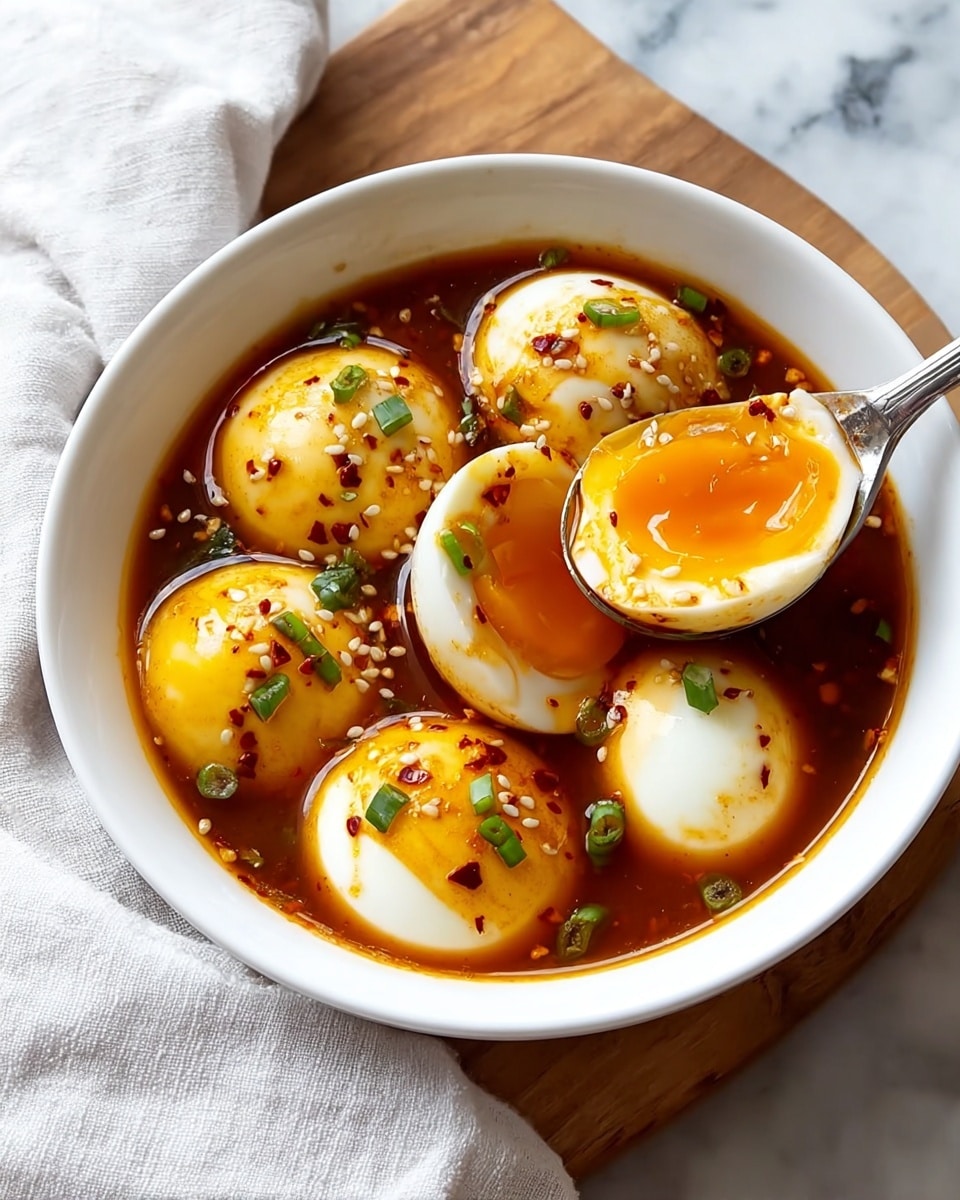
Spicy Gochujang Eggs bring a bold, flavorful twist to your breakfast that is both satisfying and quick to prepare. The spicy-sweet gochujang sauce coats perfectly boiled eggs, creating a dish that works wonderfully with rice or as a savory snack. Whether served for breakfast or as a side, these eggs add vibrant Korean flavors to your meal.
Ingredients
- 2 large eggs (boil for 6 minutes for runny yolk or 9 minutes for hard-boiled)
- 2 tablespoons gochujang (Korean red chili paste; substitute with another red chili paste if needed)
- 1 tablespoon soy sauce (use Tamari for gluten-free)
- 1 teaspoon sugar (brown sugar can be used for deeper flavor)
- 1 tablespoon rice vinegar (apple cider vinegar can substitute)
- 1/4 cup chicken stock or water (vegetable stock for vegetarian option)
- 1 tablespoon neutral oil (sesame oil can be used for extra flavor)
- 2 cloves garlic, minced (adjust amount to taste)
- 1 tablespoon scallion, sliced (chives or green onions can be substituted)
- 1 tablespoon toasted sesame seeds (optional, omit if avoiding seeds or nuts)
Instructions
- Step 1: Bring a pot of water to a rolling boil. Carefully add the eggs and cover the pot. Set a timer for 7 minutes for a jammy yolk, or adjust the time based on your preferred doneness.
- Step 2: Immediately transfer the eggs to an ice bath after boiling to stop the cooking process. Let them cool for a few minutes, then peel and set aside.
- Step 3: In a bowl, mix together gochujang, soy sauce, sugar, rice vinegar, and chicken stock (or water) until well combined to prepare the sauce.
- Step 4: Heat the neutral oil in a skillet over medium-high heat. Add the minced garlic and sauté for about 15 seconds until fragrant.
- Step 5: Stir in the sauce mixture and bring it to a gentle simmer.
- Step 6: Add the peeled eggs to the skillet, cooking for another 3 minutes. Turn the eggs occasionally to ensure they’re fully coated with the sauce.
- Step 7: Serve the eggs over steamed rice, garnished with sliced scallions and toasted sesame seeds. Optionally, drizzle with a little sesame oil for extra flavor.
Tips & Variations
- Keep a close watch on boiling times to achieve your perfect yolk consistency—overcooked eggs become rubbery.
- Don’t skip the ice bath; it halts cooking and makes peeling the eggs easier.
- If the sauce is too thin, simmer longer to reduce; if too thick, add a splash of water or stock to thin it out.
- Try substituting sriracha for gochujang for a milder, sweeter spice.
- Add fresh spinach or bean sprouts during the final simmer for added color and nutrition.
- Serve eggs over quinoa instead of rice for a nutty, protein-packed twist.
- For a deeper umami flavor, mix a spoonful of miso paste into the sauce.
Storage
Store leftover Spicy Gochujang Eggs in an airtight container in the refrigerator for up to 5 days, keeping the eggs coated in sauce to retain moisture. You can freeze them by wrapping each egg individually in plastic wrap and placing them in a freezer-safe bag for up to 3 months. To reheat, thaw overnight in the refrigerator and warm gently in a skillet over low heat, adding a splash of water to revive the sauce.
How to Serve
Serve this delicious recipe with your favorite sides.
FAQs
How do I choose ripe ingredients for my Spicy Gochujang Eggs?
Select fresh, large eggs without cracks for best results. Choose gochujang with a vibrant deep red color and no dark spots, indicating freshness. Use a balanced soy sauce that is not overly salty to enhance the dish’s flavors.
Can I freeze Spicy Gochujang Eggs, and if so, how?
Yes, you can freeze them. Wrap each peeled egg individually with plastic wrap, then place in a freezer-safe bag. They keep well for up to 3 months. Thaw overnight in the fridge before gently reheating in a skillet.
Print
Spicy Gochujang Eggs Recipe
- Total Time: 25 minutes
- Yield: 2 eggs 1x
- Diet: Gluten Free
Description
Spicy Gochujang Eggs are a vibrant Korean-inspired dish that combines perfectly boiled eggs with a bold, spicy-sweet gochujang sauce. Ideal for breakfast, a flavorful appetizer, or a savory side, this quick and versatile recipe brings a delicious punch of umami and spice to your meal, enhanced by fragrant garlic, tangy vinegar, and a hint of sweetness. Garnished with fresh scallions and toasted sesame seeds, it’s a satisfying way to elevate everyday eggs with authentic Korean flavors.
Ingredients
For the Eggs
- 2 large eggs (boil for 6 minutes for runny yolk or 9 minutes for hard-boiled yolk)
For the Sauce
- 2 tablespoons gochujang (Korean red chili paste; substitute with another red chili paste if needed)
- 1 tablespoon soy sauce (use Tamari for gluten-free option)
- 1 teaspoon sugar (brown sugar can be used for deeper flavor)
- 1 tablespoon rice vinegar (can substitute with apple cider vinegar)
- 1/4 cup chicken stock or water (vegetable stock can be used for vegetarian option)
- 1 tablespoon neutral oil (such as canola or vegetable oil; sesame oil can substitute for added flavor)
- 2 cloves garlic, minced (adjust amount for preference)
For Garnishing
- 1 tablespoon scallion, sliced (or substitute with chives or green onions)
- 1 tablespoon toasted sesame seeds (omit if avoiding seeds or nuts)
Instructions
- Boil the Eggs: Bring a pot of water to a rolling boil. Carefully add the 2 large eggs and cover the pot. Set a timer for 7 minutes for a jammy yolk (adjust between 6 to 9 minutes based on preference). This cooking time balances a slightly runny to fully set yolk.
- Ice Bath: Immediately transfer the boiled eggs to a prepared ice bath to stop the cooking process and cool them thoroughly, which also facilitates easier peeling. Let the eggs sit for at least 5 minutes before peeling and setting them aside.
- Prepare Sauce Mixture: In a mixing bowl, combine 2 tablespoons gochujang, 1 tablespoon soy sauce, 1 teaspoon sugar, 1 tablespoon rice vinegar, and 1/4 cup chicken stock or water. Stir gently until all ingredients are well incorporated into a smooth sauce.
- Cook Sauce and Garlic: Heat 1 tablespoon neutral oil in a skillet over medium-high heat. Add the minced garlic and sauté for about 15 seconds until fragrant but not browned, then pour in the pre-mixed sauce. Bring the mixture to a gentle simmer, stirring occasionally to meld the flavors.
- Combine Eggs and Sauce: Add the peeled eggs into the skillet with the simmering sauce. Cook the eggs in the sauce for 3 minutes, turning them occasionally so they are evenly coated with the spicy-sweet glaze.
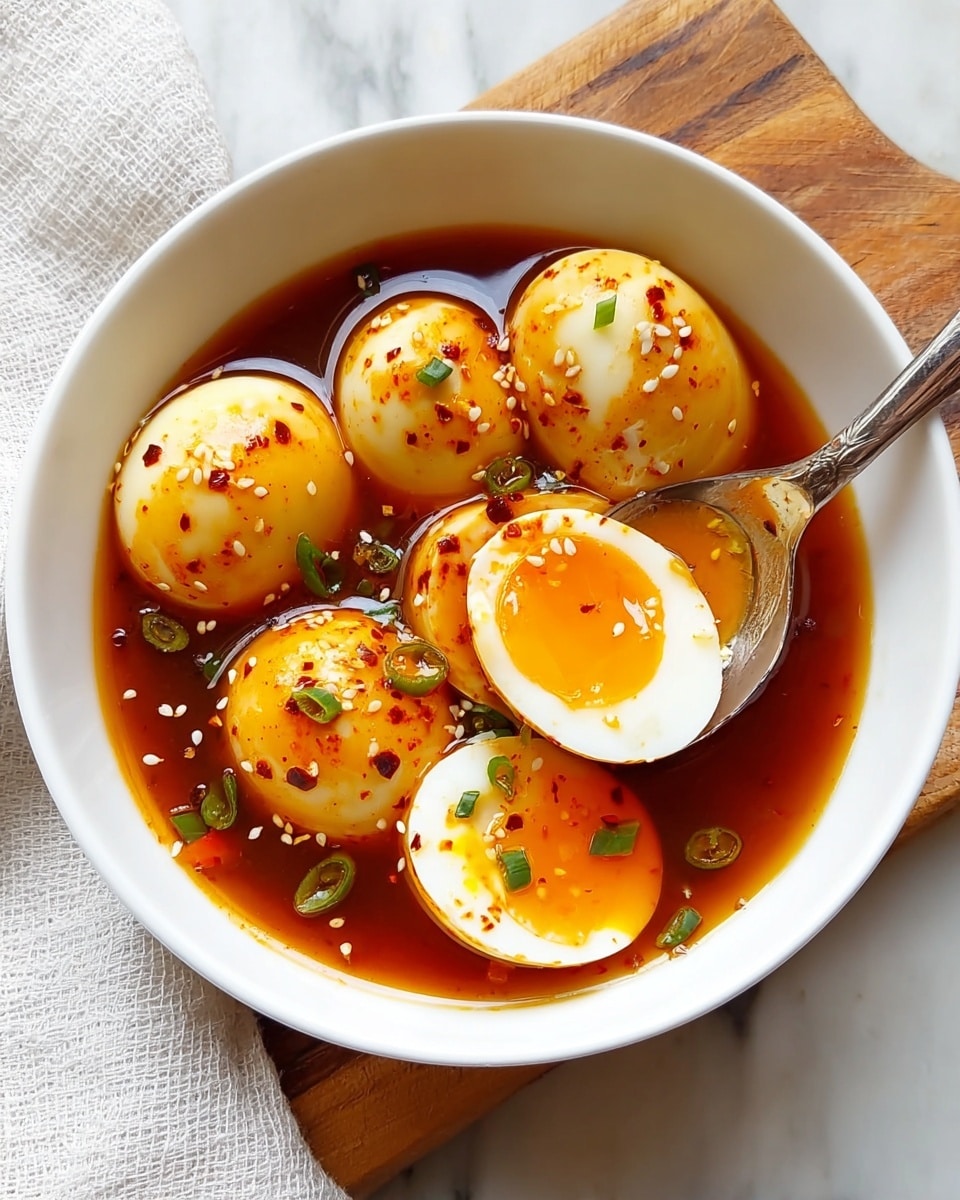
- Serve: Serve the vibrant gochujang-coated eggs over steamed jasmine rice (optional for meal serving). Garnish with sliced scallions and toasted sesame seeds for a fresh crunch and nutty flavor. For an extra flavor boost, drizzle a little sesame oil over the top if desired.
Notes
- Optional: Add a drizzle of sesame oil on top before serving for an extra nutty aroma and taste.
- Monitor boiling time carefully to achieve your preferred egg yolk texture—avoid overcooking to prevent rubberiness.
- Always use an ice bath immediately after boiling to stop cooking and aid in peeling the eggs easily.
- If the sauce is too thin, simmer longer to reduce and thicken, but watch carefully to prevent burning.
- Keep heat at medium-high but adjust as needed to maintain a gentle simmer and prevent garlic from burning.
- Leftover sauce can be saved and used as a flavorful condiment for grilled vegetables or rice dishes.
- Prep Time: 10 minutes
- Cook Time: 10 minutes
- Category: Breakfast
- Method: Stovetop
- Cuisine: Korean
Keywords: Spicy Gochujang Eggs, Korean eggs recipe, gochujang sauce, spicy eggs, breakfast eggs, Korean cuisine, boiled eggs recipe, Asian egg dishes